Optiq
Vibecoding an experimental AI fintech prototype

Problem
Fintech democratized access without expertise
Fintech has given billions of people access to financial institutions. But expanded access does not come with expanded knowledge, causing significant losses, especially in options trading.
Individual investors represent 22% of total options market volume, an all-time high.
JP Morgan Equity Strategy & Quantitative Research

-$2,100,000,000
Individual investors lost $2.1 billion in options trading between November 2019 and Jun 2021.
Bryzgalova et al., London Business School (2022)
Vibecoding
I used Figma and Cursor to build without compromising the design process
I used Figma and Cursor to build Optiq without compromising the design process. I found this combination to be the most effective for maintaining design context and precise control over components.
Backend
A backend that combines finance math with AI-powered interpretation
I left repeatable and predictable financial equations to plain code, and reserved AI for interpretative and generative uses, like comparing the equation outcome with the investor's profile.

Diagram showing how the various parts of the web-app connect.
Flow 1
A personal and human investor profile
Optiq gathers quantitative and qualitative data to form an investor profile. This allows AI to surface insights that feel both pragmatic and human.
flow 2
Simple thesis creation
Amateur investors struggle to form theses, an important part of trading. I made forming them fast and easy.
flow 3
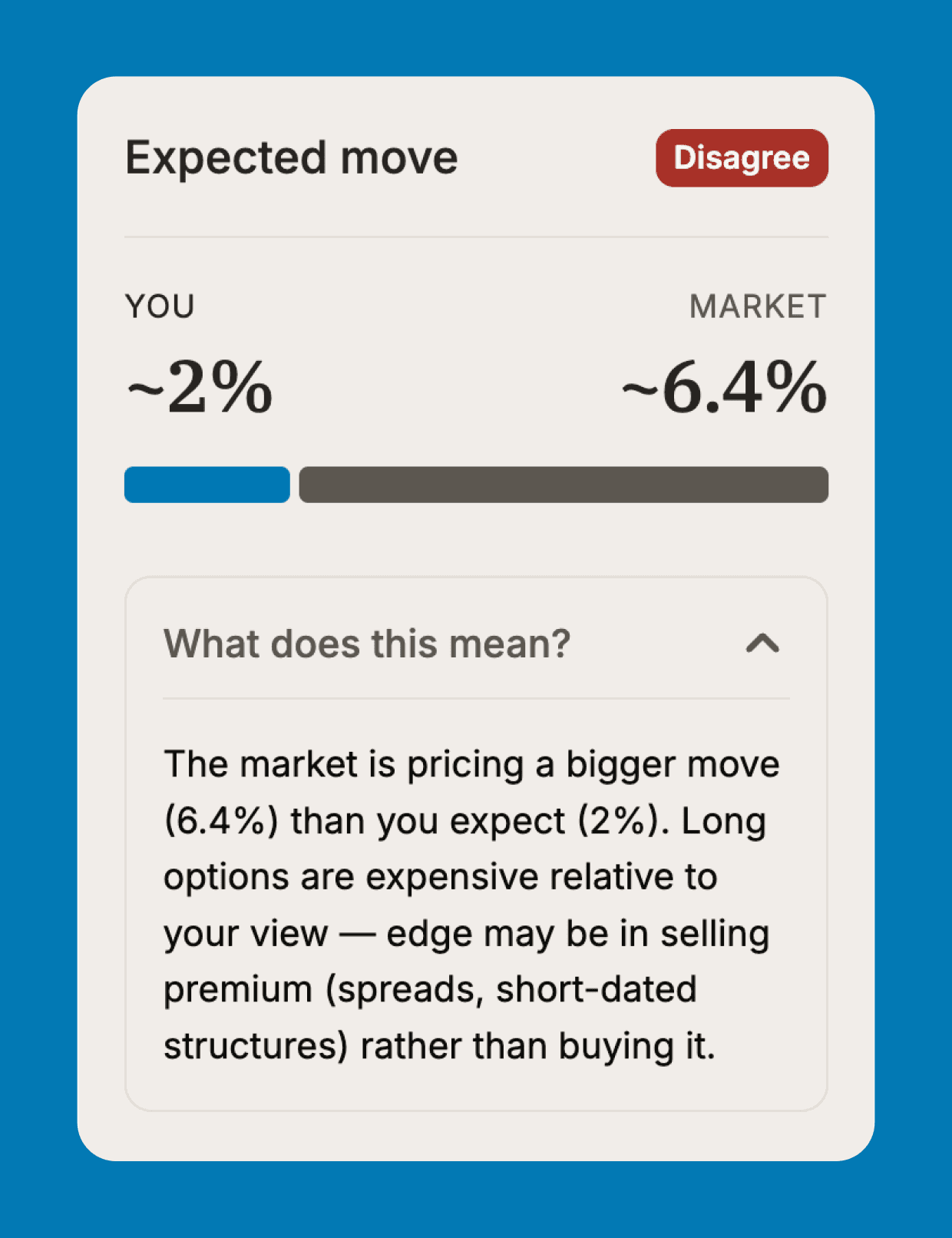
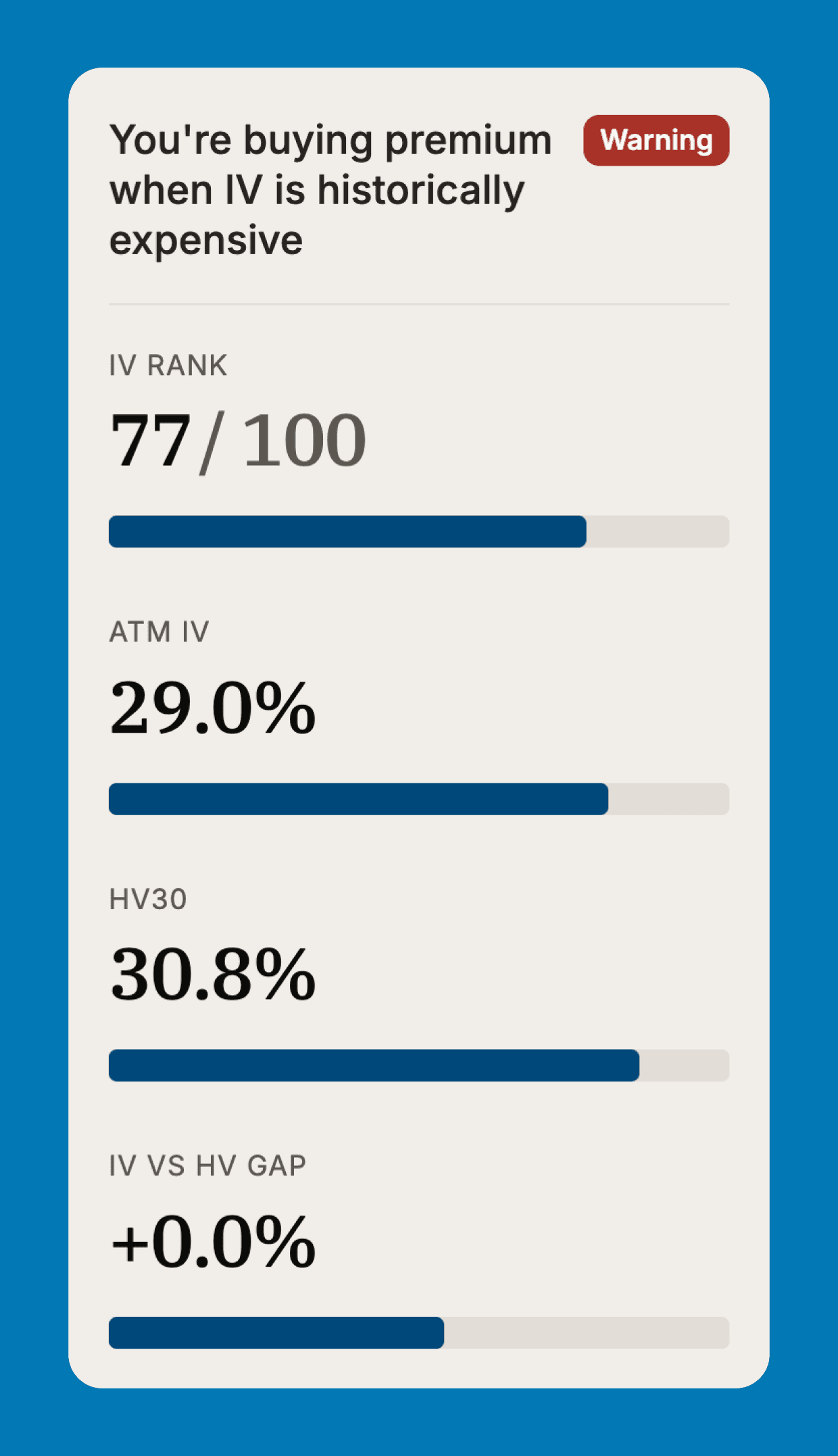
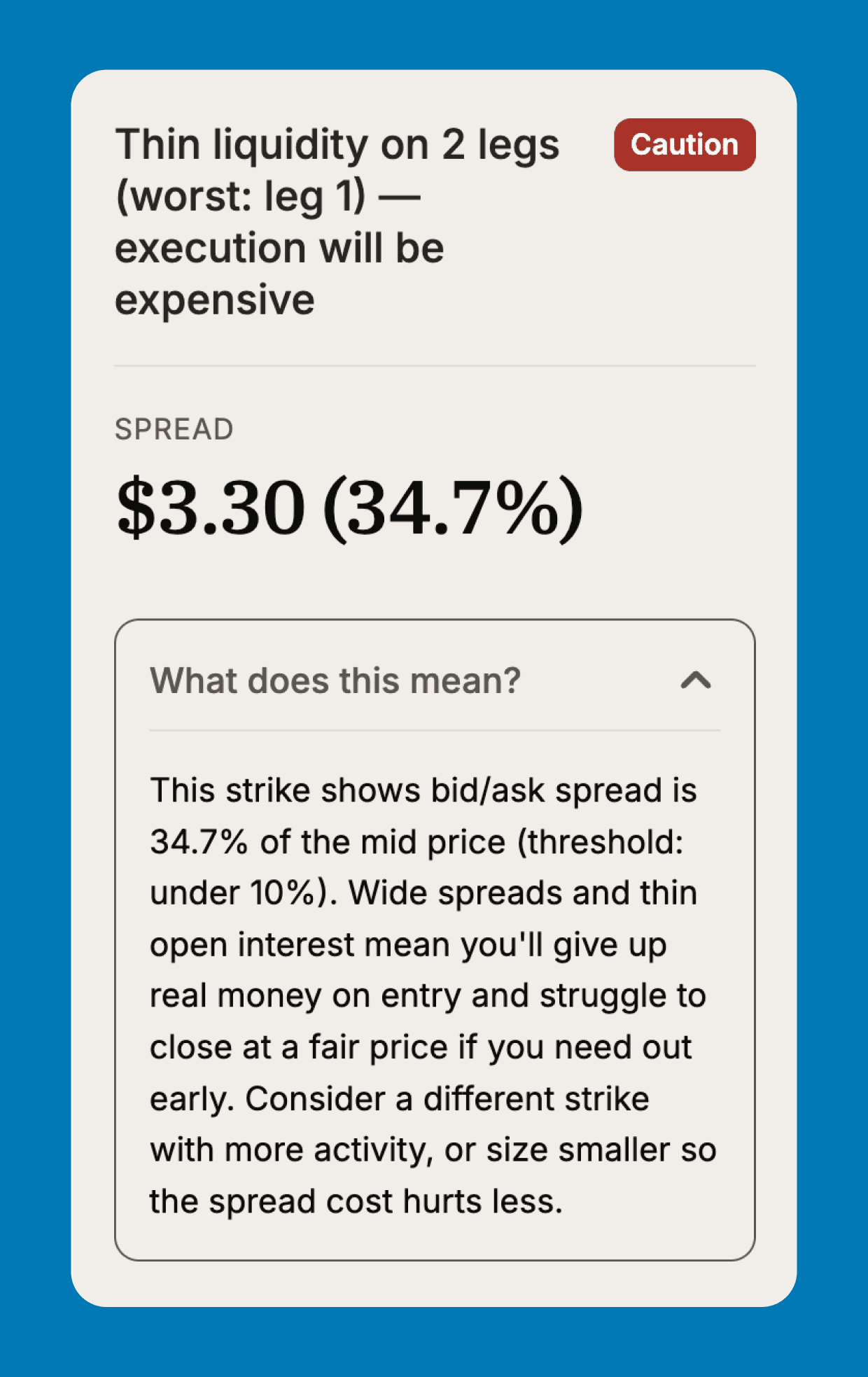
Approachable and informative insights
Optiq surfaces the same insights professionals rely on, but tailored to your thesis and in plain language.

flow 4
Personalized strategy recommendations
Optiq uses your investor profile and thesis to score and rank strategies.


Reflections
Learnings about designing and building with AI
More optionality
The ability to easily turn sketches and ideas into prototypes lets you spend more time exploring multiple directions before developing a single one.
Senior dev "wisdom" is irreplaceable
AI automating dev tasks helped me build on my own, but it did not replace the wisdom and experience that senior devs provide, like knowing what approach is best, pushing back on certain design directions, etc.